Showing posts with label Literature. Show all posts

Tuesday, July 17, 2018

Reading again: Little Fires Everywhere by Celeste Ng


Oh, reading how much I miss you. I am such a cliché of motherhood, always running like a headless chicken, leaving a million little chores halfway through because someone started crying or fell down or needed attention and that is how I spend my days. So when I have some actual time I am also dead tired and I just either fall asleep or space out.

Anyhow, the other day I actually won a giveaway! The American Book center kindly raffled a signed copy of Little Fires Everywhere by Celeste Ng (thank you!)  and I was so curious about it: the stories and descriptions of motherhood, of subversion, of disregard of the status quo.

The book sucked me right in. It took me less than 2 weeks to finish it, I don't know how I managed, I stole every little moment available. It is so good. So good, so good, so good. First of all the story takes place sometime at the end of the 1990's, the main characters are kids who were all born between 1980-1986 (like me) and are high-school students at the time the story takes place. So all the cultural references to music and political events that frame the events in the book: the president's scandal with an intern; music groups like Boyz II men, Alanis Morisette, Aerosmith; hints to what was in fashion are all things I grew up with. I feel so old writing this. I also loved the fact that the parents were part of the generation of the late 1960's, so there are slight mentions to the protests and fights of the time. That is a subject that has always fascinated and appealed to me, maybe because I did not actually live those days. Perhaps I look at them with a certain naïveté, but it seems to me that the youth's ideals back then were so transparent and pure, that they really believed in change, that a better world was possible and they were out to make it happen... unlike the somehow cynical attitudes of the young of today:  lost and perplexed after having seen socialism fail and simultaneously experiencing the ravages of imperialism, capitalism, extreme neo-liberalism. Defeated? Resigned?

Then there is also one of the main themes of the book, so painful, so close:  motherhood and who deserves it and why. And is it even a matter of deserving?


So here are, at random, some of my favorite parts.

-When Elena Richardson describes her experiences of having a very early premature baby. It brought it all back in words I could never have put together myself:

"Despite these precautions, Izzy had arrived precipitously soon thereafter, making her appearance -eleven weeks early- an hour after her mother arrived at the hospital. Mrs. Richardson would remember the next few months only as a vague, terrifying haze. Of the logistical details, she remembered only a little. She remembered Izzy curled in a glass box, a net of purple veins under salmon-colored skin. She remembered watching her youngest through the portholes in the incubator, nearly pressing her nose to the glass to be sure Izzy was still breathing. She remembered shuttling back and forth between home and the hospital, whenever she could leave her oldest three in the capable hands of the housekeeper -nap time, lunchtime, an hour here and there- and when the nurses allowed it, cradling Izzy against her: first in her two cupped hands, then in the hollow between her breasts, and finally -as Izzy grew stronger and filled out and began to look more like a baby- in her arms.

For Izzy did grow, despite her early start, she displayed a tenacity of will that even the doctors remarked upon. She tugged at her IV; she uprooted her feeding tube. When the nurses came to change her, she kicked her thumb-sized feet and hollered so loudly the babies in nearby incubators woke and joined in. "Nothing wrong with her lungs", the doctors told the Richardsons, though they warned a host of other problems that might arise: jaundice, anemia, vision issues, hearing loss. Mental retardation. Heart defects. Seizures. Cerebral palsy. When Izzy finally came home -two weeks after her scheduled due date- this list would be one of the few things Mrs. Richardson would recall about her time in the hospital. A list of things she would scan Izzy for over the next decade: Did Izzy simply not notice things, or was she going blind? Was she ignoring her mother out of stubbornness, or was she going deaf? Was her skin looking a bit yellow? Was she looking a bit pale? If Izzy's hand, reaching to add a stacking ring to her toy, fumbled, Mrs Richardson found herself clutching the arms of her chair. Was it a tremor, or just a child learning the complicated business of managing her own fingers?

Everything Mrs. Richardson had put out of her mind from the hospital stay -everything she thought she'd forgotten- her body remembered on a cellular level: the rush of anxiety, the fear that permeated her thoughts of Izzy. The microscopic focus on each thing Izzy did, turning it this way and that, scrutinizing it for signs of weakness of disaster. Was she just a poor speller, or was this a sign of mental impairment? Was her handwriting just messy, was she just bad at arithmetic, were her temper tantrums normal, or was it something worse? As time went on, the concern unhooked itself from the fear and took on a life of its own. She had learned, with Izzy's birth, how your life could trudle along on its safe little track and then, with no warning, skid spectacularly off course." ANGER IS FEAR'S BODYGUARD, a poster in the hospital had read, nut MRs Richardson had never noticed it".

-Also, this description of parenthood:

"To a parent, your child wasn't just a person: your child was a place,a kind of Narnia, a vast eternal place where the present you were living and the past you remembered and the future you longed for all existed at once. You could see it every time you looked at her: layered in her face was the baby she'd been and the child she'd become and the adult she would grow up to be, and you saw them all simultaneously, like a 3-D image. It made your head spin. It was a place you could take refuge, if you knew how to get in. And each time you left it,each time  your child passed out of your sight, you feared you might never be ale to return to that place again."

-Then this part:

"But three generations of Shaker reverence for order and rules and decorum would stay with Elena, too, and she would never quite be able to bring those two ideas into balance. In 1968, at fifteen, she turned on the television and watched chaos flaring up across the country like brush fires. Martin Luther King, Jr., then Bobby Kennedy. Students in revolt at Columbia. Riots in Chicago, Memphis, Baltimore, D.C. -everywhere, everywhere, things were falling apart. Deep inside her a spark kindled, a spark that would flare in Izzy years later. Of course she understood why this was happening: they were fighting to right injustices. But part of her shuddered at the scenes on the television screen. Grainy scenes, but no less terrifying: grocery stores ablaze, smoke billowing from their rooftops, walls gnawed to studs by flame. The jagged edges of smashed windows like fangs in the night. Soldiers marching with rifles past drugstores and Laundromats. Jeeps blocking intersections under dead traffic lights. Did you have to burn down the old to make way for the new? The carpet at her feet was soft. The sofa beneath her was patterned with roses. Outside, a mourning dove cooed from the bird feeder and a Cadillac glided to a dignified stop at the corner. She wondered which was the real world. 

The following spring, when antiwar protests broke out, she did not get in her car and drive to join them. She wrote impassioned letters to the editor; she signed petitions to end the draft. She stitched a peace sign onto her knapsack. She wove flowers into her hair. 

It was not that she was afraid. It was simply that Shaker Heights, despite its idealism, was a pragmatic place, and she did not know how to be anything else. A lifetime of practical and comfortable considerations settled atop the spark inside her like a thick, heavy blanket. If she ran off to Washington to join the protests, where would she sleep? How would she stay safe? What would become of her classes, would she be expelled, could she still graduate and go to college? The spring of their senior year, Jamie Reynolds had pulled her aside after history class one day. "I'm dropping out", he said. "Going to California. Come with me." She had adored Jamie since the seventh grade, when he had admired a sonnet she'd written for English. Now, at almost eighteen, he had long hair and a shaggy beard, a dislike for authority, a VW van in which, he said, they could live. "Like camping out", he'd said, "except we can go anywhere," and she had wanted so badly to go with him, anywhere, to kiss that crooked, bashful smile. But how would they pay for food, where would they do their laundry, where would they bathe? What would her parents say? The neighbors, her teachers, her friends? She'd kissed Jamie on the cheek and cried when, at last, he was out of sight.  (...)She had no regrets, she told herself. She'd been crazy to have considered it even for a moment. (...) All her life, she had learned that passion, like fire, was a dangerous thing. It so easily went out of control. It scaled walls and jumped over trenches. Sparks leapt like fleas and spread as rapidly; a breeze could carry embers for miles. Better to control that spark and pass it carefully from one generation to the next, like an Olympic torch. Or, perhaps, to tend it carefully like an eternal flame:; a reminder of light and goodness that would never -could never- set anything ablaze. Carefully controlled. Domesticated. Happy in captivity. This philosophy had carried her through life. Rules existed for a reason: if you followed them, you would succeed; if you didn't you might burn the world to the ground."

And this excerpt in Mia and Mrs. Richardsons final conversation:

"It bothers you doesn't it?"  Mia said suddenly. " I think you can't imagine. Why anyone would choose a different life from the one you've got. Why anyone might want something other than a big house with a big lawn, a fancy car, a job in an office. Why anyone would choose anything different than what you'd choose": Mow it was her turn to study Mrs. Richardson, as if the key to understanding her were coded into her face. "It terrifies you. That you missed out on something. That you gave up something you didn't know you wanted". A sharp, pitying smile pinched up the corners of her lips. "What was it? Was it a boy? Was it a vocation? Or was it a whole life?"

Have you read the book, did you like it? Which were your favorite parts?

Thursday, August 21, 2014

Summer reading


I am struggling a bit to keep up my reading habit. It is hard when I find myself constantly running to keep things pseudo-clean and pseudo-tidy and everyone fed and happy. Then, when there is some time left, I end up collapsing in the couch, taking naps to catch up on sleep or doing laundry or going out for walks or running errands. But reading is important for me, and I try to make the time for it. Switzerland was glorious, because I was so relaxed that often I put the baby in the garden to play and took the time to read myself.

If you are looking for ideas, Lauren has set up the #Better in Real Life Reading List and there are often reviews coming up. From her list, I would definitely like to read "Truth & Beauty" by Ann Patchet, "Animal, Vegetable, Miracle" by Barbara Kingslover and maybe "The light between oceans" by M.L. Sedman, though I am torn about that last one, because it seems to be so, so sad. A while ago I read "Storyteller, the authorized biography of Roald Dahl" and actually loved it. I was fascinated by Roald Dahl's life (he was a spy and a pilot, he knew the likes of Walt Disney and Roosevelt) and I liked getting an insight on the inspiration behind his stories.

As someone who loves to read, and as a challenge to force myself to actually do it I decided to write a review for the BIRL reading list, and got assigned "The view from Castle Rock", by Alice Munro. I was really excited to have this book assigned. I’d heard Alice Munro won the Nobel Prize in Literature in 2013 and I had been wanting to read her. Part memoir, part fiction, part imagined what could-have been, this book is a collection of short stories, independent of each other, but actually linked together as they trace back a family’s history (Alice’s own) of a migration from Scotland in the eighteenth century to North America, ending up in Canada and detailing their adventure as they look for a better future in far away, unknown lands. It takes the reader from the Ettrick Valley near Edinburgh, through Newfoundland, to Chicago, Joliet, The Huron Valley, Ontario… It is the story of great grandmother’s and grandfather’s, of uncles, of lost-relatives as the times change until today. In case you missed it, my review and Shaelyn's and the discussion is here.

Other than that, I finally had the chance to finish reading "La amigdalitis de Tarzan", by Alfred Bryce Echenique, one of the books Zarawitta sent me for this year's #AOWbookswap. I really, really liked it. The books tells the story of a pair of friends / lovers that meet in their early 20's in Paris during the late 1960's and follows them and the circumstances that led them to not-end-up-together, through almost 30 years. But what's different is that the story is told through the letters they sent to each other through many international moves, across oceans and continents (though mostly between Europe and America). It talks about love, but also about Latin America, about being a young naive girl, about discovering the world, about being an artist, about repression and corruption, about staying pure and joyful in the most adverse of circumstances, as stated by one of the phrases that gets repeated over and over again in the book: "Experimentó la angustia y el dolor, pero nunca estuvo triste una mañana"*. The quote is supposed to be Hemingway, I believe it's from the Old Man and the Sea, but I am going crazy trying to find the original quote and I don't seem to be able. Anyone recognizes it?

I've also read Baby-led weaning, as we are going to more or less try that with baby Y. I say more or less, because I love cooking and I am also kind of into preparing purées. And I no longer subscribe to any parenting theory or technique that is so fundamentalist in their approach that proclaims that doing X or Y or Z is forbidden or else *whatever it is you are trying to do* will not work. I am excited though, to have her eat real foods, to experiment with colors, flavours and textures at her own pace.

What have you been reading? Any recommendations?

* This would translate as something like: "She experienced anguish and pain, but never was she sad one morning". (Though of course, being Hemingway, it must be written better).

Thursday, July 10, 2014

Little free library, Minibieb, Kinderzwerfboek.


 The other day Mark came home for work and told me he had seen something from the window of his car while driving around and he wanted us to go explore it further. He said it was a little box filled with books outside of a house he passed and that it seemed that it was open to the public.

And indeed it was. Did you know about the 'Little Free Library' initiative? I didn't, but I am beyond excited. The concept, as it name says, is having small bookshelves with free access to books all over the world, on a "take one, leave one" premise. The movement started in the USA but it has soon spread everywhere. I am so excited to go on an urban search looking for more of these! Zarawitta and NLE I am looking at you and daring you too: there are two in Mexico, one in Mexico city and a second one in Guadalajara. 

In The Netherlands there is a similar initiative called 'Minibieb' (Mini bibliotheek), you will find a bunch of these in children petting farms (kinderboerderijen). And there is even more. On one of our walks I found a book laying on top of a bench, forgotten, apparently. The boy hates it when I pick up, or even observe, dirty 'junk' that lays in the world. But I saw a children's book that had a sticker on it that read: "Neem me mee, lees me... en laat me weer zwerven" (Take me, read me and let me roam again). And so I took it. This time the idea of "sending your books on a trip and following their adventures", or Kinderzwerfboek, comes from the National Fund for Children (Nationaal fonds kinderhulp).

 This makes me so, so happy. I've ranted before on how it makes me sad that over here access to so-called public libraries is no longer free for everyone (only for those under 18) because of lack of subsidies.


This kind of social, independent reactions to the system is what really makes the world a different, friendlier place for everyone.  Have you found any of this boxes of magic in your area?

Friday, April 4, 2014

Books coming, books going.


 Snail mail is my favorite, and books are the best invention ever. So, naturally, #AOW bookswap season is always a source of joy.

But then, when it turns out that one of your close friends, who you actually met through blogging and playing photographic games, serendipitously happens to be your bookswapper, well, that's what I call magic.


I just opened a parcel that arrived yesterday and you should have seen my surprise when I opened the cardboard envelope and I found a navy blue package with a yellow ribbon, and then I read some Alice-in-Wonderland-style instructions.

At the beginning of the week I ordered 'The view from Castle Rock', by Alice Munro (last year's Nobel prize winner), the book I got assigned for Reading time by Lauren TM, and I was certain those were the contents of the package. But no, it was my #AOW bookwsap book! So special. Thanks so much! And nope, even though I picked it up a few times and I was this-close to buying it, I had always let it go, in favour of something else.


More coincidences... my AOW bookswap package is leaving the country today. I hope its recipient will like it.

Oh, and in case you are curious, these were my answers to the 'Very Special Questionnaire of Book Joy' (in Anna K's words). 
-----------------------------------------------------------------------------------------------------------------------
Q1. Hello! What is your name and whereabouts in the world are you?My name is Amanda and I am a Mexican-Swiss-British girl living in The Netherlands


Q2- Who is your favourite author?
Julio Cortazar, Milan Kundera, Herman Hesse 
 
Q3-What is your favourite book of all time and how would you describe it in three words?
Rayuela (Hopscotch, Julio Cortazar). Magic, Coincidences/Serendipity, Love-story-in-Paris.
  
Q4-What was the best book you read in 2012 - again, describe in 3 words?
  Storyteller, the life of Roald Dahl, by Donald Sturrock. Fun, Intriguing, Smart. I also enjoyed "French children don't throw food" by Pamela Druckerman.
  
Q5-What was your least favourite book you read in 2012 and why - in no more than 50 words?
  Why be happy when you could be normal, by Jeanette Winterson. This is actually a good book, beautifully written, great story, the title drew me hard. But I found it so absolutely sad (borderline depressive) that even if the end does get better and it is full with lessons about life, it left me with a bad taste of mouth. But then again that's art.
 
Q6- If you could only take 3 books to a desert island, what would they be?
 The chronicles of Narnia, Rayuela (Hopscotch), The fairy tales of Hans Christian Andersen, and.... Alice in Wonderland
Q7-What was your favourite book as a child?
Hans Christian Andersen-s fairy tales, I read the Chronicles of Narnia later, when I was around 12, and loved them too. I was also a big fan of "Crusade in Jeans" by Thea Beckman and "Microbe hunters" by Paul de Kruif.   
I just realized the last two books in that list were written by Dutch authors. And I ended up marrying a Dutch guy. Also, "Crusade in Jeans" was also a favorite book of Mark as a kid. Yet more coincidences. 
--------------------------------------------------------------------------------------------------------------------------
What are you reading right now? Do you have any recommendations? Would you like to play along and answer the questionnaire in the comments?

The Alice in Wonderland illustration is by Marjorie Torrie, found here. 

Friday, February 21, 2014

To marvel


----------------------------------------------------------------------------------------------------------------------
marvel 
1. One that evokes strong surprise, admiration, astonishment or wonder.
2.  verb. mar·veled also mar·velled, mar·vel·ing also mar·vel·ling, mar·vels also mar·vels
v.intr. To become filled with wonder, admiration or astonishment as at something surprising or extraordinary. To feel amazement or bewilderment at or about. To  be curious about.

[Middle English marvail, from Old French merveille, from Vulgar Latin *miribilia, alteration of Latin mīrābilia, from neuter pl. of mīrābilis, wonderful, from mīrārī, to wonder, from mīrus, wonderful; see smei- in Indo-European roots.]
------------------------------------------------------------------------------------------------------------------------
My word for the year came to me sometime during those days when I was still in shock trying to learn and understand what had happened to us, the huge surprise that shook our worlds, even-though we thought we were prepared for it, and had been preparing for a rather long while. 

Same as with our "unexplained" infertility diagnosis, where cases like ours account for about 1 % of all couples (10% of 10%), the causes for her mysterious arrival through a Preterm Premature Rupture of Membranes (PPROM) remain unknown to the medical science. We just received the final results from all the tests made*  and no abnormalities were found.  "PPROM occurs in about 1% of all pregnancies".

This girl is a miracle and a fighter since the very beginning and I am convinced that she just wanted to meet us earlier, after such a long wait. We are immensely grateful to every single person that was involved in her coming to life and in her care those early days. This includes prayers, thoughts, support (Yes, that's you). But most of all it leaves me in absolute awe. And that is what she is teaching us, and has been doing so since the very start. 

To savour every moment. To be present in the now. To focus in the instant. To always find the joy.

"Stay a while, you are so beautiful", "Permanece, eres tan bello", “Verweile doch, du bist so schön” (Goethe, in his play Faust, talking to the instant).
------------------------------------------------------------------------------------------------------------------------
* Bacterial cultures in blood, vaginal swaps and urine, pathological study of my placenta.

Tuesday, January 28, 2014

It's #BookSwap time

Thanks Lauren

Remember last year's book swap, hosted by the lovely ladies at Any Other Woman? Well it is that time of the year again, and it is open internationally. All you have to do is leave a comment on this post saying you are in.

Here are the rules: 

---------------------------------------------------------------------------------------------------------------------------
It’s going to work the same way as last year:

- You go to this link and leave a comment with a variation of ‘ME! YES! WEEEEEEEEEEEEEEEEEE! I’M IN! ME ME ME!’

- We throw all your names, beautifully written on peach paper in navy ink, obvs, into a very stylish hat. (We’ll probably borrow one of Ellie’s. She has some v. fashion forward ones.)

- We send you a questionnaire to fill out, all about the books that made you, you. This was my absolute favourite part of the whole thing last year. Apart from my perfect package of books and chocolate from the lovely Carly. Lucky, I was.

We randomly assign each of you someone fabulous to send a book to.

- You send your person a book that you think they’ll love. or a book that you love. A book that will make them think, make them sing, make them cry…. you get the picture.

- You receive a magical, wonderful, perfect book in the post from your person. EVERYBODY WINS.
---------------------------------------------------------------------------------------------------------------------------- 

PS: Yulia Alitzel, Mark and I are all doing fine. It has been a few hectic weeks, I promise you will get the scoop as soon as I have a moment to write. Thanks to each and everyone of you for your kind comments and congratulations and for the support all along our journey.

Monday, January 13, 2014

# January Joy: See a Film


When I heard that Disney was planning an animated version of Hans Christian Andersen's classic fairy tale: 'The Snow Queen' I was super excited.

I have always loved Hans Christian Andersen's stories and The Snow Queen is amongst my all-time favorites. We finally saw Frozen this weekend and I don't know what to say. I really liked the movie. It is a Disney movie in the classic sense: there are adventures, singing, funny characters, and the action is paced in such a way that you never get bored. It's a good movie. I enjoyed it. I did not even like a Disney movie so much in a long time.

But, it has absolutely nothing to do 'The Snow Queen'. Nothing. Except of course that the main character's heart gets frozen. And even then, it's not the same. Disney's version is lacking depth: princess Anna's heart gets accidentally frozen by her sister Elsa (who hasn't quite learnt to control her powers) during an argument, threatening to kill her by hypothermia. In Hans Christian Andersen's tale Kai's frozen heart affects all of him. It's not only physical cold we are talking about, but he becomes cruel, mean and isolated.


Let's start at the beginning though:

- The Snow Queen tells the story of a little girl and a little boy, Gerda and Kai, who are neighbours and friends, who read and take care of a garden together in their adjoining balconies. I always imagined the children as not being older than 12, though it's not specified. In Frozen, Kai is unheard of. It 's the story of two sisters, who of course also happen to be princesses, one of whom has magic ice-controlling powers and all the action happens once they are grown up.

- The Snow Queen herself is an evil character, a proper villain, who lures Kai into following her, then  kidnaps him, steals his memories of Gerda and his life before and locks him up in her ice-palace until he is able to solve a riddle. In Frozen, the Queen just happens to be the older sister and she is not really evil. She just decides to isolate herself for fear of the harm her powers might cause to others.

- Kai's heart gets frozen when a piece of a broken-enchanted mirror gets into his eye and heart, making him unpolite, mean, selfish. The enchanted mirror pieces are spread over the Earth after some naughty, wicked devils let it fall to the the World while trying to bring it to heaven to show it to God and the angels, with intents to make them look like fools.The  mirror has the property of distorting reality, turning everything pure, beautiful and kind into ugly and evil. None of this takes place in Frozen, and Anna's frozen heart does not affect her personality at all. It just makes her physically weak and puts her life in danger.

- After Kai is kidnapped by the Snow Queen (and everyone declares him dead), Gerda, who does not lose faith in her friend, sets on a journey to find and rescue him. During her trip she meets all kinds of magic and mischievous characters: some will help her and some will try to keep her away from her mission. There's 'the old woman who knew magic' who brushes her hair and attempts to keep Gerda with her forever by making her forget Kai and hiding the roses that would always remind her of him. There's a talking crow that thinks he saw Kai at a nearby palace, but it turns out he mistook Kai with a Prince. Then there's the Princess who wouldn't marry anyone who wasn't at least as smart as her. And a little robber girl on a caravan, who nonetheless decides to help Gerda in her quest so she releases her and even lends her a reindeer who knows the way to the Snow Queen's palace. There are a couple of Finnish and Lap women who'll both give hints to little Gerda. This could have made for some great characters, but they are all missing in Disney's version (well, I guess except for the reindeer).

So even though Frozen is a fun, entertaining and nice story by itself, what was Disney thinking to pretend one story has anything to do with the other?

Pictures from here and here. 

Monday, December 2, 2013

High tea with Elizabeth Gilbert


Last week I was lucky enough to win an online competition* and had the chance to attend an interview, book signing and reading with Elizabeth Gilbert, who's on a book tour promoting her newest book: "The Signature of all things".


The high-tea took place at the Hortus Botanicus in Amsterdam. The botanical garden is one of the oldest in the world, founded in 1638 by the city to serve as an herb garden for doctors and apothecaries. It contains more than six thousand tropical and indigenous trees and plants. Its initial collection was amassed during the 17th century through plants and seeds brought back by traders of the East India Company (VOC) for use as medicines and for their possibilities for commerce. A single coffee plant, Coffea arabica, in Hortus's collection served as the parent for the entire coffee culture in Central and South America (oh how I wish I could have a cup of coffee right now).


The book itself takes place in the midst of the 19th century botanical exploration and discoveries and tells the story of Alma, the daughter of an English pharmaceutical-plant merchant and a Dutch woman of an intellectual family. She's an independent, curious girl, fascinated by science and later, evolution, who will end up being pulled in a more spiritual direction, who'll struggle to reach out of her logical and material boundaries and discover there's more to the world than the rational (but I am just starting to reach that part, as I'm halfway through the book).


It was really nice to meet the person behind "Eat, Pray, Love" and "Committed". She seemed very kind and down to earth, talking about her love for travel, living and enjoying life (saying how even if we do not understand the purpose of it all, the journey 'is interesting'), and emphasizing how the hard spiritual 'work' (and joy) is found in connection, forgiveness, love.

*Thanks to Marcela for letting me know about the event :) and to bol.com for organizing it.

Monday, October 7, 2013

Londoners (and Peace camp at Parliament Square)


 I just very recently finished reading: "Londoners: The days and Nights of London Now -as told by those who love it, hate it, live it, left it and long for it" by Craig Taylor. It is written as a set of stories of all kinds of people, rich and poor, native and immigrant, women and men, talking about London. People who work at pubs, or in the stock market; a young man who started living in the city amongst the homeless and had to sleep at a park. The girl whose voice you hear announcing your next stop at the underground station. Those who came to the city from far and close... As with people, I guess, some stories were very easy to read and relate to, and I found others more difficult. But it really gives a perspective of the life of the city. One of my favorite stories was that of Barbara Tucker, protester at Parliament Square. Brian Haw started a peace camp at the famous square, just outside Westminster Abbey in 2001, exposing the consequences of the UK and US foreign policy. He became a symbol of the anti-war movement, and the camp lasted for 12 years of peaceful protest. "Protesters had planted crops in the square, including lettuce and carrots. There was a kitchen with drinking water in the Peace Camp". I just learnt that, sadly,  the last tents were removed this May, so I consider myself lucky that we actually saw the camp on its last months this January. Here's an excerpt of her story, from the book:
-----------------------------------------------------------------------------------------------------------------------
Barbara Tucker / Protester.

"I always say, every single building around here should be covered with the truth. It should be all over the place, you know? Then they'd soon stop, wouldn't they? Because what I've noticed is, they don't mind doing what they're doing, but they really don't do shame. What they're doing is really shameful. It beggars belief. You have to share that truth. The dynamic is brilliant here, because the global community of people come past, and we're giving them the opportunity to learn as much as they want. Not only to give you information , but to show you that yes, you can challenge your government. Yes, you can say no. The people who are suffering and dying will never be forgotten. while we're here. You know? And if that was happening to your family member, you'd want somebody to speak out about wouldn't you, really? 


I say to people, 'Welcome to Westminster Village. The only thing we do well is making a killing out of the suffering of others'. I've been arrested thirty-nine times in five years. I've learnt that if you cannot stand your ground in a public space to tell the truth without violence, you shouldn't be doing what you're doing. It's those in the government who duck and dive, and run and hide behind their gate, the weapons, the cheap sound bites in the TV studios and the corrupt courts. Some nights when they have a late night getting out I stand here with the loudspeaker and I say to them, as my little bedtime story: you are going to spend the rest of your miserable lives looking over your shoulders, checking your holiday itineraries, cos' whether it's ten years, twenty years or thirty years from now, you know, people will hunt you down, bring you to justice- we're not saying we're going to murder you or slaughter you, but we'll bring you to justice and change the systems that have allowed this to happen where human life is not protected. It's my little bedtime story. It's like, go to sleep with that one.

I've got 'Arrest war criminals' or 'Stop killing children' or other banners. They've got big tough machine guns. Protecting what? It just wakes up people. (...) We are in the belly of the beast, really. We're surrounded. I say to people who pass by, I say on the loudspeaker, as long as this country will want to occupy other countries, then we're occupying Westminster Village. We will occupy your minds, your time, your money, to remind the thousands of people that work in Westminster, that all you do is perpetuate the lies of this government that lead to the suffering of innocent civilians. And that when 90 per cent of the casualties of these legal wars are affecting civilians, it can't be war.


(...) 

If we're going to have a normal world, let's bring people together. Because they try and portray it, 'Maad people over there', because that's the game, isn't it really. 'They're mad over there'. Let's make it as hard for you to go over there and discover that actually it's quite interesting, you know, who's doing what. I'd love to see this open, you know, as a sort of people's square. It's got to be kept open for everyone. What's the point of having a square if there's no access to it? It's got to be the people's square you know. It should remain with the people for ever. "

Thursday, June 6, 2013

Books, books.


A couple of weeks ago I finally finished reading "The god of the small things", the book I received from the lovely Chirsty. I took me a while to read it, I had a hard time concentrating, but once I got sunk in by the story, it was like being there.

I wrote a short review, you can read it over at Any Other Woman. If you are like me, always looking for new books, there is also a review for "Pure" and "The night circus".

Here's one of my favorite excerpts:

“It was the story of a poor girl who is forced to marry a fisherman from a neighbouring beach, though she loves someone else. When the fisherman finds out about his new wife’s old lover, he sets out to sea in his little boat though he knows that a storm is brewing. It’s dark, and the wind rises. A whirlpool spins up from the ocean bed. There is storm music, and the fisherman drowns, sucked to the bottom of the sea in the vortex of the whirlpool. The lovers make a suicide pact, and are found the next morning, washed up on the beach with their arms around each other. So everybody dies. The fisherman, his wife, her lover, and a shark that has no part in the story but dies anyway”.

(Is it weird that the part about the shark made me smile?). (And talking about sharks, have you seen this video? I kind of have a crush on Mika, I love everything he's involved in.)

Monday, May 6, 2013

Of saints and superstitions


Deeply ingrained in Mexican culture is the belief in the supernatural. With the arrival of the Spanish and the imposition of the Catholic faith, the precolumbian and newly arrived beliefs mixed and intertwined so closely that something completely particular emerged. If you wanted rain, as an Aztec you'd dance for Tlaloc. But, since colonial times, to avoid it,  you'd bring eggs to Santa Clara. Replace fertility godess Coatlicue for Virgin Guadalupe, and you've got everyone following you. The list goes on and on, as the rituals in which many of us, just for good measure, cautiously believe in. If you are looking for your life-long partner, get a San Antonio and turn him upside down. Make sure the broom never goes close to your feet when cleaning the floor or else you might never marry (you'd sweep your luck away). And rice has to be thrown at newlyweds as they emerge out of the church, after the ceremony.


I am very much aware that devotion to saints is one of the most controversial aspects of the Catholic faith, and one of the reasons that ignited the iconoclasts rage and led to the Protestant reformation. Yet, every time I go inside a church I feel the urge to light a candle and pray. It's not that we adore saints... it's that given that they are "closer" to God in the celestial court, they can whisper in His ear, and perhaps, perhaps, help in granting you what you ask for. The short story "Aunt Isabel", by Angeles Mastretta (a part of the book "Mujeres de Ojos grandes" / "Women with big eyes") reflects all of this so well.  This is why it is one of her short stories that I appreciate the most. Here's the start of the story, in English, but scroll down for the original version in Spanish.

"The day her father died, Aunt Isabel Cobián lost faith in all unearthly power. When the illness began she went to ask the Virgin of the Sacred Heart for help, and a little while later, to ask Señor Santiago, who had in his parish a saint with such an efficacious appearance that he was riding on horseback. Since neither of the two obliged by interceding for the health of her father, Isabel visited Santa Teresita, who looked so good; Santo Domingo, who was so wise; San Joseph, who, merely by dint of being chaste, should have everything granted to him; Santa Mónica, who suffered so with her son San Agustín, who suffered so with his mama; and even San Martín de Porres, who was as black as his disgrace. But since throughout the course of five days no one had interceded on her father's behalf, Aunt Isabel made her way to Jesus Christ and his selfsame Father to pray for the life of her own. Anyway, her papa died as had been decided at his conception: On Wednesdey the thirtheenth of February, 1935, at three in the morning. Then, surprisingly to Aunt Isabel, the earth didn't open itself up, nor did the day cease to dawn, nor were the birds that made a daily scandal in the ash tree of the garden quiet. Her brothers and sisters were not left speechless; her mother didn't even stop moving with the grace of her lovely body. Worse still, Isabel herself remained perfectly alive, in spite of always having believed that this event would kill her."


"El día que murió su padre, la tía Isabel Cobián perdió la fe en todo poder extraterreno. Cuando la enfermedad empezó ella fue a pedirle ayuda a la Virgen del Sagrado Corazón y poco después al señor Santiago que había en su parroquia, un santo de aspecto tan eficaz que iba montado a caballo. Como ninguno de los dos se acomidió a interceder por la salud de su padre, la tía visitó a Santa Teresita que tan buena se veía, a Santo Domingo que fue tan sabio, a San José que sólo por ser casto debía tener todo concedido, a Santa Mónica que tanto sufrió con su hijo, a San Agustín que tanto sufrió con su mamá y hasta a San Martín de Porres que era negro como su desgracia. Pero ya que a lo largo de cinco días nadie había intercedido para bien, la tía Isabel se dirigió a Jesucristo y a su mismísimo Padre para rogar por la vida del suyo. De todos modos su papá murió como estaba decidido desde que lo concibieron: el miércoles 13 de Febrero de 1935 a las tres de la mañana. Entonces, para sorpresa de la tía Isabel, la tierra no se abrió ni dejó de amanecer, ni se callaron los pájaros que todos los días escandalizaban en el fresno del jardín. Sus hermanos no se quedaron mudos, ni siquiera su madre dejó de moverse con la suavidad de su hermoso cuerpo. Peor aún, ella seguía perfectamente viva a pesar de haber creído siempre que aquello la mataría."

Santa Rita, advocate of the Hopeless and the impossible, is clearly whom I should turn to.

Tuesday, April 16, 2013

Learning a new culture, by studying a language.

  This post was written as part of the Intercultural Blog Carnival that will take place on April 17. The aim is to provide advice and support for those just settling in a new country. This post is a short, general version of a post I wrote on what helped me learn Dutch.
 ---------------------------------------------------------------------------------------------------------------------
I have lived and studied in 4 different countries (5 if you count my birthplace) and understand 6 languages (4 in which I am fluent, 2 which I can manage quite well). Moving around has made it clear to me that learning the local language is a crucial part of understanding the new culture: it's not just the words, it's the philosophy, the cosmovision, the way of seeing life that you slowly start to understand, all of which are incredibly helpful in the process of adapting to a new country. You will probably end up as a citizen of the world, because every time you take a little bit of every place with you, you understand better, you see how similar we are, and how different at the same time.

Sure, there are countries where you can manage to survive speaking only English. But I can only recommend making an effort and going the extra step, you will not regret it and the locals will appreciate it. Here are some ways in which to tackle language learning, aside from the obvious and unavoidable lessons, which are inevitably needed to master such basic things as grammar and spelling:

 -Go to the local library or bookshop and get a good thick dictionary. I find conjugation dictionaries particularly helpful, and pictionaries are a nice extra for your collection. Then go to the kids’ section. As a start, children books can be a great tool. Try reading those before moving to literature in the language of your new country. And speaking of literature, I am a strong advocate of, when at all possible, reading authors in their original language. At some point I was naive/arrogant enough to buy Goethe's Faust in German because I thought I was going to learn in 8 months. I still own the book, but needless to say I haven't read it. And if I weren't reading translated authors I would have missed geniuses like Milan Kundera or Leon Tolstoi. At the moment, I am really curious to start reading Dostoievski.

-Get immersed in the culture. Watch TV. Listen to the radio. Read the newspapers. Visit museums and art galleries. Even seemingly "silly" stuff can help. Get a magazine subscription and try to read all of it, even if at the beginning all you do is look at the pictures. Search the TV guide and look for programs made for children, they tend to be simple and easily understandable. Find out your favourite music in the local language and try to write down the lyrics. If you have kids, learn children songs’ and sing along with them.

 -Don’t be shy and start talking. At first you’ll only be saying things like: “Thank you” and “Please”. Then, you will be able to ask for the bread exactly as you like it at the bakery and soon you will be talking to the people in your neighbourhood.

It might seem an overwhelming task, and it will for sure require time and effort. You will get frustrated. But slowly and surely you will start noticing progress and you will not regret it. Meeting new people, learning new cultures is an experience and an opportunity that, as an expat or traveler of the world you should not miss.

Wednesday, March 13, 2013

The British Countryside


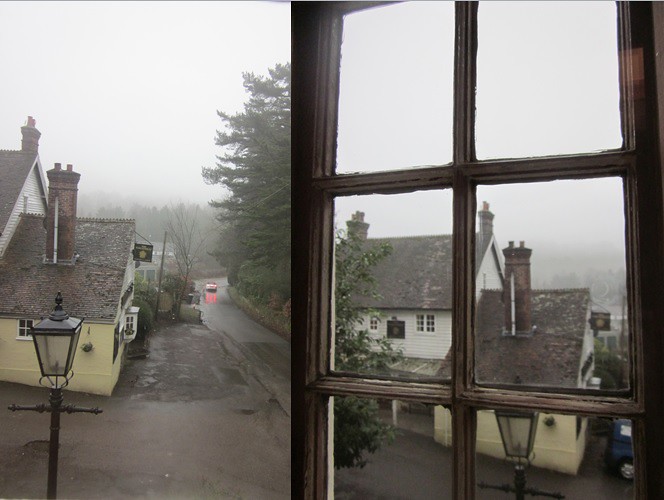
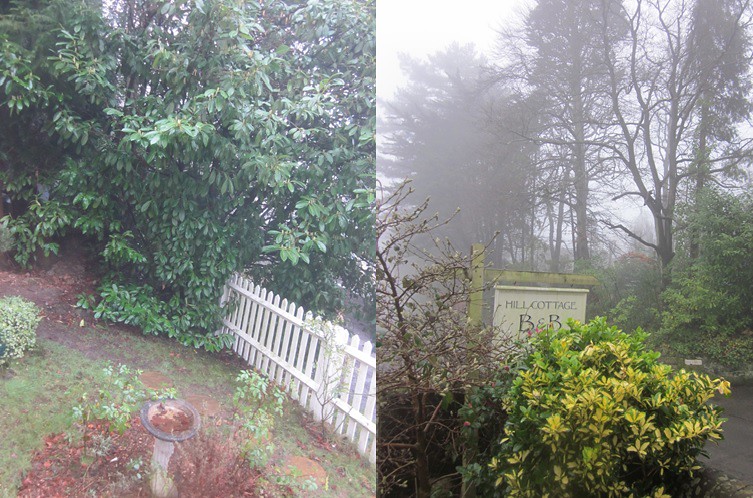
Last weekend I was on a short trip to East Sussex, between London and Brighton for a painting class.  You know how they say that the images that your mom saw when you were in uterus can create memories in the baby as well? Well, I felt some kind of connection. I feel really at home in the UK, even with the misty, wet and gray tendencies of the weather. And I can't help thinking that it is the very kind of landscape to which my mom was exposed to during her pregnancy.


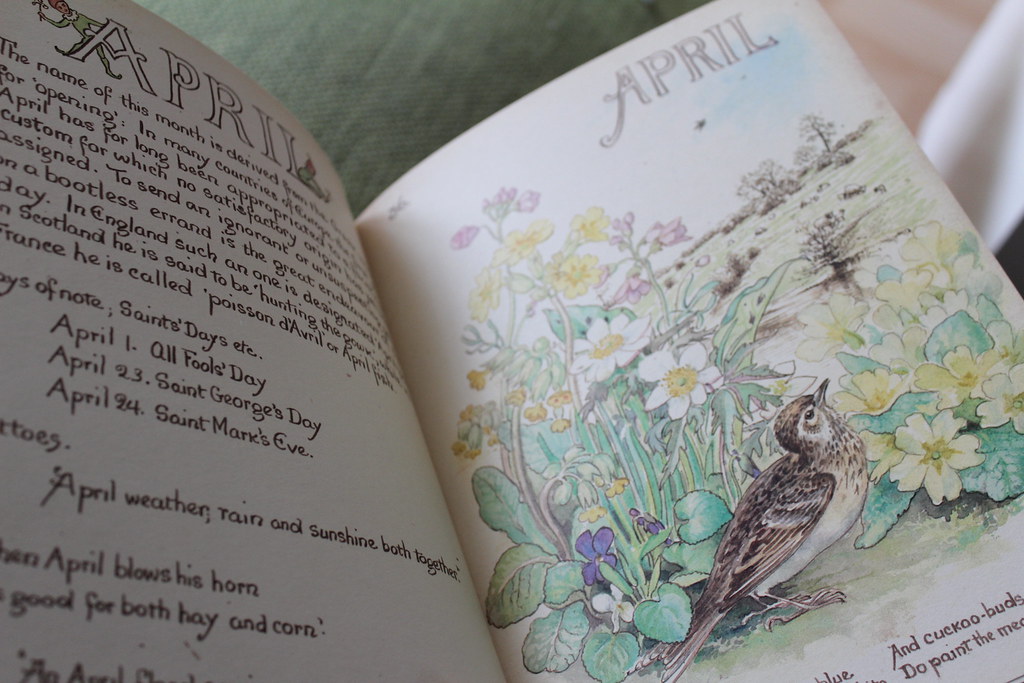
I also have to show you the newest addition to our bookshelf: "The country diary of an Edwardian Lady", by Edith Holden. You see, I have a soft spot for biographies and memoirs. But when they are an actual facsimile of a handwritten journal, which include poems, snippets of walks, personal thoughts and lovely and scientifically accurate drawings of nature (complete with latin names), I melt.


Edith Holden was born at Kings Norton, Worcester in 1871, one of seven children of a Midlands paint manufacturer (no wonder she was attracted to art then). The family lived in the small village of Olton in Warwickshire where she wrote and illustrated the journal. She recorded in words and paintings the flora and fauna of the British Countryside through the changing seasons of the year. She details observations on the wildlife she saw surrounding Warwickshire and on her travels through England and Scotland. Her journal is a testament to her deep love of nature and were executed with a naturalist's eye for detail (which would make her an early biologist of sorts) and the sensitivity of an artist.

Have you ever been at a place to which you feel strongly connected to, without having been there before?

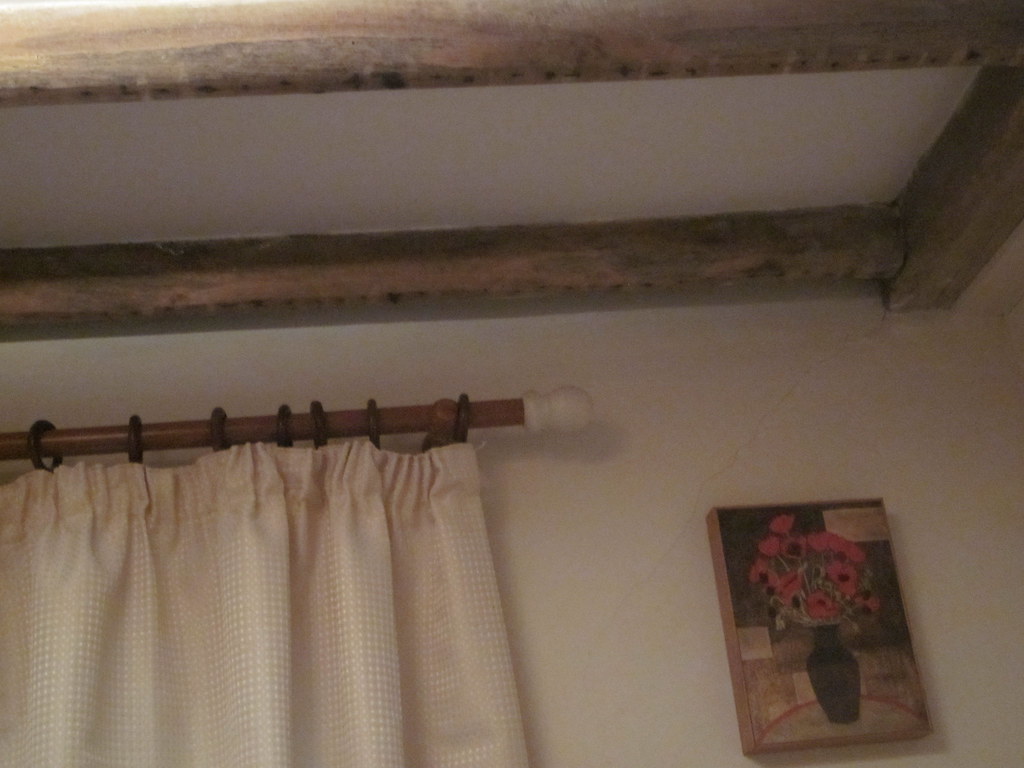
I love that my room had a painting of a bunch of Poppies.

Wednesday, March 6, 2013

Of books and exams


 My AOW bookswap parcel finally arrived. Thanks Chirsty :) I felt like a child waiting for Christmas day, and when I took the little packages out of the envelope I let them sit in the table and stared at their beautiful wrappings and ribbons for a while. Then I could not wait anymore and I had to open them. I am a spoiled girl. Chirsty did not send me one, but two books, both of which I haven't read. The first one: "The God of Small Things" by Arundhati Roy had been on my 'should-read-this-book' list for a long time, and I believe it will fit perfectly with my mantra for 2013: 'joy all year'. The second book I got is "Love in time of cholera" by Gabriel García Márquez, another classic, which I haven't read. I will make the boy read it too, because he has to get an introduction to magic realism.


In case anyone is curious (because you all know I'm an oversharer), I'll delight you with  my  answers to the AOW book swap questionnaire, which you had to answer before it got sent to your assigned swapper and with which hopefully your magic pen pal (anyone who makes books arrive to my doorstep is magical) would hope to find a book you'd like. Oh and if you are curious about other people's answers (notably Aisling, Anna and Clare, who organized it, plus some of us in the comments go here). And here's a glimpse of what other people have gotten. Pretty packages are the best thing ever aren't they?


- Who is your favourite author?
Julio Cortazar, Milan Kundera, Herman Hesse 
 
-What is your favourite book of all time and how would you describe it in three words?

Rayuela (Hopscotch, Julio Cortazar). Magic, Coincidences/Serendipity, Love-story-in-Paris.
  
-What was the best book you read in 2012 - again, describe in 3 words?
 Leonora, by Elena Poniatowska. It is the biography of Elena Carrington. Fascinating, Rebel, Animal lover, ahead of her time.
  
-What was your least favourite book you read in 2012 and why - in no more than 50 words?
 The particular sadness of lemon cake by Aimee bender. I found the story disturbing, I had to re-read the ending several times to make sure I understood correctly. It made me feel very sad (though, the fact that written words made me feel physically ill says something about how the author succeeded at putting feelings into words, and that is I think the definition of art.)
 
- If you could only take 3 books to a desert island, what would they be?
 The chronicles of Narnia, Rayuela (Hopscotch), The fairy tales of Hans Christian Andersen, And.... Alice in Wonderland

-What was your favourite book as a child?
Hans Christian Andersen-s fairy tales, I read the Chronicles of Narnia later, when I was around 12, and loved them too. 


This is how the package I sent looked like, though the book I sent is not the one on the photo, but "Tear this heart out" ('Arráncame la vida, by Angeles Mastretta). I saw the idea of drawing on envelopes on pinterest and totally had to try it.

Oh and I have some good news. Remember I took the NT2-II (official exam of Dutch as a second language) at the end of January? Well the results were released yesterday and I passed! I couldn't believe it, I was sure I had to redo at least one part, but no, I passed it all. I might have spent the whole afternoon jumping up and down while singing: "ik ben geslaagd, ik ben geslaagd, ik ben geslaagd, ik ben geslaagd!".  I keep trying to convince the boy that I should get this dress in reward of my efforts (too bad it is obscenely expensive).

Monday, February 25, 2013

Family recipes, stamppot and fertility


In case you missed it, last Friday a lovely and deeply meaningful story, called "The miracle of the Latkes", by Julia from "Writings in the raw", led to a discussion on family recipes, grandmas, traditions and how something apparently simple, like food, can become a transcendent part of your inner family culture. A comment in the thread (by Granola) summarized it best:

"The times when I have prepared the recipes of my mother and grandmother and great grandmother and great aunts are some of the most mundane and meaningful of my life. It’s as if a very fine and strong thread is connecting us, through moving and illness and death and new things; there’s a power in it that I think is the closest thing in this world to real magic."

Or like Laura Esquivel, author of "Como agua para chocolate" (Like water for chocolate), put it in this interview* for the BBC:

"... (la cocina) es un gran laboratorio de alquimia. Es un lugar sagrado donde uno no sólo está en contacto con los cuatro elementos que conforman el mundo, jugando con ellos, sino que entra en comunión con el verdadero origen y con algo más allá....El acto de cocinar es un acto de amor. Todo aquello que hace que dos cosas se conviertan en una es un acto amoroso."

And so I would like to take this opportunity to lead you readers to "Project recipe swap", organized by Laura, from The Mrs. Makes, "as a little nod to all those women in our lives who have lovingly taught us their heirloom recipes, let us lick the cake spoon and learnt their favourites by heart." Anyone in the world can participate, you just have to email her / comment on this post, she will then send you a questionnaire, pair you up with someone, to whom you will send a recipe. You will of course receive a recipe as well and after you make it you can report it back to her so as to put a giant recipe file. It sounds like fun! Snail mail! Cooking! Sharing!


On the same line, this got me thinking, the first time I made stamppot, the Dutch's national dish, the boy took a pic, put it on instagram with a little comment: "My Mexican wife is finally making Dutch food (stampot met worst) now." And the other day I read that according to some, stamppot might increase fertility. 

 So for those curious, it is actually very easy to make this dish. You just boil some potatoes and peel them. In the meantime you should cook a traditional sausage (worst) according to the instructions (normally you just submerge it for 15 min in boiling water). Once your potatoes are ready you mash them with a little bit of water, milk and butter and season with salt, pepper, nutmeg (and maybe some chilli powder) while on a low fire. You should then add your vegetables (normally shredded curly kale, but really, anything can do), and mix until it reaches the consistency and taste you desire.


 You proceed to eat it with the sausage (and a little parmesan cheese if you're like me). Funny story: when we were in the UK we were invited to a very typical British restaurant. And what does the boy order? A dish called "kale mash" which was essentially stamppot (except of course it was drowned in gravy). 


Related Posts Plugin for WordPress, Blogger...